
Kenya’s correctional institutions consume an estimated 62,000 tonnes of firewood annually, raising questions about the environmental cost of running the country’s prisons even as the government pushes to replace wood fuel with cleaner energy and modernise offender management.
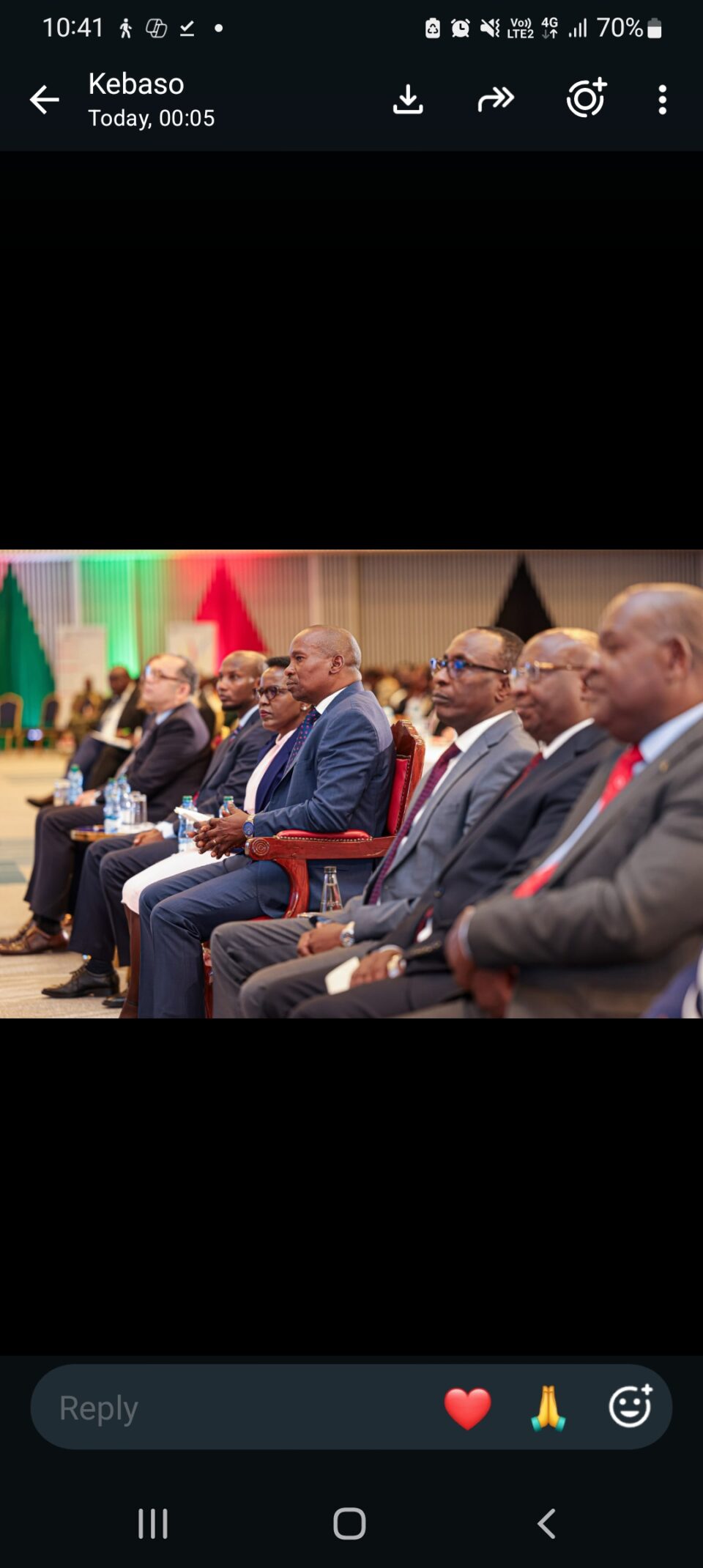
“But correctional operations themselves also have an environmental footprint,” Ambassador Ali Daud Mohamed, Kenya’s Special Envoy on Climate Change, told delegates during the Fourth Correctional Services Week in Nairobi on October 13.
Amb. Mohsmed revealed that through the ongoing work on institutional clean cooking jointly with the Department of Corrwctional Services, it emerged that each inmate consumes about 2.5 kgs of firewood on a daily basis.
“With a population of about 68,000 inmates, this translates to about 170 tons of firewood consumed daily, or an eatimated 62,000 tons annually,” he said, noting that this exerts unimaginable pressure on the country’s forests.
Subsequently, the figures put the environmental impact of correctional services firmly on the agenda as officials consider how to reduce dependence on wood fuel, adopt digital systems and turn prisons into centres of sustainable production and skills development.
“The environmental consequences depend not simply on how much wood is burned, but also on where it comes from, how it is harvested and whether forests are allowed to regenerate,” Amb. Mohamed said, suggesting that correctional authorities need to establish what proportion of the wood fuel comes from sustainably managed forests and what proportion is sourced from indigenous forests.
Such information would help determine the actual pressure on forest ecosystems and provide a baseline against which the proposed transition can be measured.
Currently, the Department for Correctional Services is pursuing a transition away from solid wood fuel, with LPG among the options being rolled out.
It’s understood that previously, the department set 2028 as its target for moving all correctional institutions away from wood fuel. Other options under consideration include biogas, solar-powered systems and electric cooking technologies.
Principal Secretary for Correctional Services Dr. Salome Beacco said the government was committed to implementing the directive to move institutions away from solid wood fuel.
“On environmental sustainability, we are committed to implementing the Presidential directive on transitioning correctional facilities from solid wood fuel to liquefied petroleum gas (LPG),” she said.
The shift could reduce demand for firewood and the smoke associated with burning biomass in institutional kitchens. However, LPG is a fossil fuel, making it important for the department to assess a wider mix of options—including biogas and electric cooking—according to the reliability of electricity supplies, infrastructure requirements, operating costs and the needs of individual institutions.
Mohamed urged correctional authorities to look beyond LPG as they expand the programme.
“I particularly commend the Department for proactively advancing the transition of correctional kitchens to clean cooking. However, beyond LPG, I encourage you to explore other more environmentally sustainable solutions like electric cooking and biogas as you expand to other institutions.” he said.
The envoy also identified other areas where correctional facilities could reduce their environmental footprint. These include solar energy for lighting and water heating, solar-powered irrigation, rainwater harvesting, more efficient water use, wastewater treatment and the conversion of organic waste into biogas and fertiliser.
He cautioned, in effect, that the environmental challenge extends beyond kitchens.
“Diesel-powered irrigation pumps and generators, excessive water consumption, soil degradation and poorly managed organic waste and wastewater can also undermine sustainability efforts,” Amb. Mohamed cautioned.
The proposed reforms within the department of Correctional Services therefore present an opportunity to examine the full environmental cost of its operations rather than focusing exclusively on firewood.
The reform agenda also places technology at the centre of efforts to improve the management of offenders and the delivery of correctional services.
Deputy President Prof. Kithure Kindiki said the purpose of the reforms must go beyond institutional security and the management of prison populations.
“The effectiveness of correctional services cannot be measured solely by institutional security or the number of people managed,” he said.
His remarks place rehabilitation and reintegration alongside security and administrative efficiency as measures of the correctional system’s performance.
The State Department is developing the Integrated Correctional Management Information System (ICMIS), intended to strengthen offender information management, improve information sharing, enhance accountability and support evidence-based decisions.
Kindiki said secure digital systems, data analytics and emerging technologies could help institutions improve operational planning, identify gaps in service delivery and allocate limited resources more effectively.
“Used responsibly, better information systems could help correctional officers coordinate rehabilitation programmes, track participation in education and vocational training, and identify the support people may need as they prepare to return to their communities,” the DP said, setting the stage for the three-day deliberations.
But digital transformation, he stated, will require more than replacing paper files with electronic records.
Systems, according to Prof. Kindiki must protect personal information, maintain accurate records and guard against discriminatory decisions.
The DP believes that technology should support professional judgement and rehabilitation, not become a substitute for them.
“For reforms to make a measurable difference, the department will also need to demonstrate how digital systems improve services and outcomes for the people under its care,” he noted.
The environmental transition could also create opportunities for inmates to acquire practical skills that remain useful after release.
Amb. Mohamed proposed that Kenya Prisons Enterprises be enabled to participate throughout the green-technology value chain—from fabricating institutional cooking equipment and components to installing, operating, maintaining and servicing clean-cooking systems, solar installations, irrigation equipment and biogas plants.
“Such an approach would connect environmental investment with vocational training and productive work inside correctional institutions,” he added, pointingnout that inmates could potentially gain experience in equipment fabrication, electrical installation, plumbing, irrigation, renewable-energy maintenance and waste management.
“With appropriate training, recognised qualifications and links to employers, these skills could improve their prospects of earning a livelihood after release,” said Amb. Mohamed, urging the department to develop partnerships with private companies, financial institutions, development partners and climate-financing organisations to support practical projects.
He also challenged officials to identify a small number of priority interventions, pilot them in selected institutions and develop concrete plans with partners and financing arrangements.
“Let the 2026 Correctional Services Week produce more than recommendations. Let it deliver concrete commitments, implementable projects and measurable results,” he said.
The proposal raises an important question for the correctional system on whether public investment in cleaner energy and modern infrastructure – simultaneously – can reduce environmental harm and help prepare inmates for productive lives beyond prison walls.
Beacco said the department’s mandate was to promote a just and secure society through effective offender management and the administration of justice.
“At the core of our mandate is the responsibility to promote a just and secure society through effective offender management and the administration of justice,” she said.
She also highlighted efforts to improve living conditions in women’s prisons, including support from Faraja Trust, which supplied beds and mattresses and extended assistance to other correctional institutions.
The initiative points to another dimension of correctional reform, which includes the dignity and welfare of people in custody. Environmental sustainability and digital efficiency matter, but they must be pursued alongside decent living conditions, access to rehabilitation and respect for human rights.
Kindiki said green solutions and technology should reinforce the core purpose of correctional services rather than distract from it. He called for continued investment in education, vocational training, psychosocial support, restorative justice and family participation, as well as community-based alternatives to imprisonment.
“Our correctional institutions must therefore become not only centres of rehabilitation, but also platforms for skills development, innovation and sustainable production,” he said.
That vision requires institutions to be assessed not only by the infrastructure they acquire, but also by the opportunities they provide and the outcomes they achieve.
