
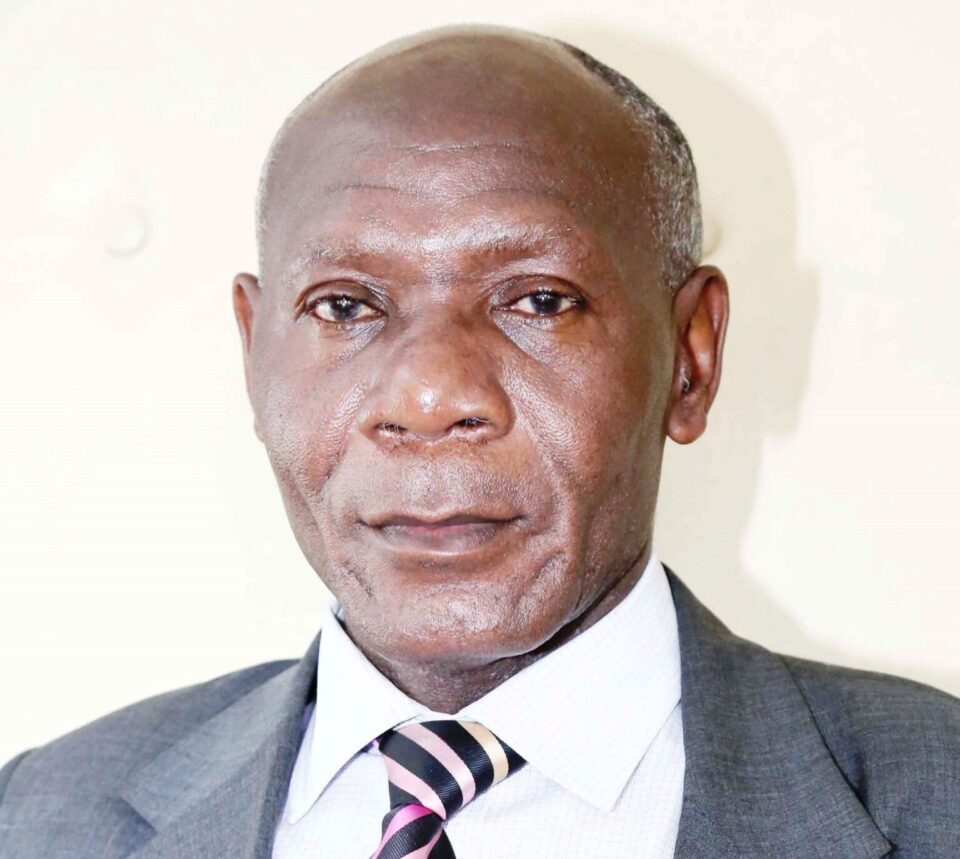
By KENNEDY BUHERE
“An investment in knowledge pays the best interest.” — Benjamin Franklin
University education is slated for major reforms under the auspices of the Commission for University Education (CUE).
Media reports indicate that the Commission has prepared a draft Competence-Based Framework for University Education (CBFUE), which, if adopted, is expected to align universities with the Competency-Based Education (CBE) framework—the blueprint for education reforms whose implementation began in 2019.
According to a Daily Nation report of August 22, 2026, titled CBE framework proposes major changes in university education, the proposed changes will affect what students are taught, how lecturers teach, how students are assessed and the skills they are expected to demonstrate upon completing undergraduate education.
The changes will also reportedly seek to establish appropriate links between university programmes and relevant industries.
It is heartening that CUE has risen to the occasion to spearhead reforms in higher education. There has been a crying need for far-reaching reforms in the university education sector. This need has existed with or without the seismic changes taking place at the basic education level.
For a long time, this country has treated higher education as a twilight zone in education reports. Nearly all reports on education and training reforms in Kenya have focused excessively on basic education. Such reports have rarely dealt with the nuts and bolts that underpin university education.
We have never had a task force or presidential working party specifically established to examine university education. The closest the country came to directly confronting the subject was the Report of the Presidential Working Party on Education and Manpower Training for the Next Decade and Beyond, chaired by James Kamunge.
Even then, the focus was largely on the financing of education rather than the substance of university education—teaching and research. It was the Kamunge report that gave us the idea of cost-sharing in education.
The university system symbolises something transcendent. It exists to preserve, create and share knowledge.
Former Yale University president Richard Levin argues that universities “provide the ideal context for educating graduates for careers in science, industry, government, and civil society who have the intellectual breadth and critical-thinking skills to solve problems, to innovate, and to lead.”
It is needless to say that universities have a purpose that goes beyond the concerns and purposes of primary and secondary education.
In education systems such as those of the United States and the United Kingdom, governments and university leaders have sought to preserve, maintain and improve the capacity of universities to serve society optimally.
They have gone further. In the United States, for instance, university leaders have at times sought to influence the quality of secondary education, particularly the education of students destined for college and university.
One of the earliest instances in which university leaders sought to influence secondary education across the states came in the 1890s.
Concerned about inconsistent college entrance requirements, the National Education Association authorised a Committee of Ten eminent educationists to recommend standards for various core subjects in the secondary school curriculum.
Chaired by Harvard University president Charles W. Eliot, the committee sought to establish greater rigour and coherence in secondary school course offerings. Its recommendations subsequently influenced the high school curriculum.
The United States has built an excellent university education system while remaining vigilant about the quality of education experienced by children in elementary, middle and high schools.
It worries about whether schools are discharging their responsibilities properly, as demonstrated by the attention given to the Programme for International Student Assessment (PISA).
PISA measures the ability of 15-year-olds to use their reading, mathematics and science knowledge and skills to meet real-life challenges.
This vigilance can also be seen in the 1983 Report to the Nation and the Secretary of Education, titled A Nation at Risk, chaired by then University of Utah president David Pierpont Gardner.
“The educational foundations of our society are presently being eroded by a rising tide of mediocrity that threatens our very future as a Nation and a people,” the report warned in its introduction.
It added that what had once been unimaginable was beginning to happen—that other countries were matching and surpassing America’s educational attainments.
If there is anything the Committee of Ten and A Nation at Risk reports demonstrate, it is that the purposes and duties of universities are distinct from those of the basic education system.
A university charts its own vision, purposes and programmes. It also has a responsibility to ensure that students joining it are adequately prepared for the rigours of higher education.
In a nutshell, the American university system has developed its strengths and excellence while the country has continued to grapple with reforms and challenges in its school system throughout the 20th and 21st centuries.
The same applies to the UK. Britain has had commissions on university education that have operated independently of reforms in pre-university education.
The Robbins Committee on Higher Education remains a reference point in the history of higher education in the UK. One of its most memorable principles was that “courses of higher education should be available for all those who are qualified by ability and attainment to pursue them and who wish to do so.”
Suffice it to say that reforms and policy actions concerning university education should not, in the best of circumstances, be driven by reforms at the basic education level. That is not how things have generally worked in other established national education systems.
Methinks the higher education system in this country should be doing two things.
First, it should teach students how to think rigorously. Second, it should use its rich fund of knowledge, skills and judgment to advise on the kind of curriculum at the basic education level that best prepares students in reading, writing and thinking.
The demand that CUE and university leaders should make of basic education authorities is simple: students sent to universities, both in Kenya and abroad, should be college-ready.
They should possess the necessary knowledge, skills and attitudes to undertake university education with confidence.
The interaction between policymakers in basic education and those in higher education should therefore focus on how well learners who eventually qualify for university are prepared in terms of knowledge, reading, writing, thinking, listening and attitude towards higher education.
What takes place within universities—policy, standards, curricula and assessment—should remain substantially independent of this interaction.
Professors and university administrators are duty-bound to identify the critical gaps between the knowledge and skills students ordinarily bring to university and what university lecturers expect them to possess.
This is a duty that universities have not satisfactorily discharged.
My little thinking tells me that CUE should have been coordinating the collection and collation of information on the knowledge, skills, attitudes and behavioural gaps among students entering university every year.
If such reports demonstrate statistically significant gaps, they could inform policy interventions by the Ministry of Education at the basic education level.
That, in my view, would be a more productive relationship between basic and higher education: universities defining their own standards and expectations while helping basic education authorities understand what students need to know and be able to do before they arrive at the university.
Kennedy Buhere
Communication Specialist
