
By CHARLES MAATHAI
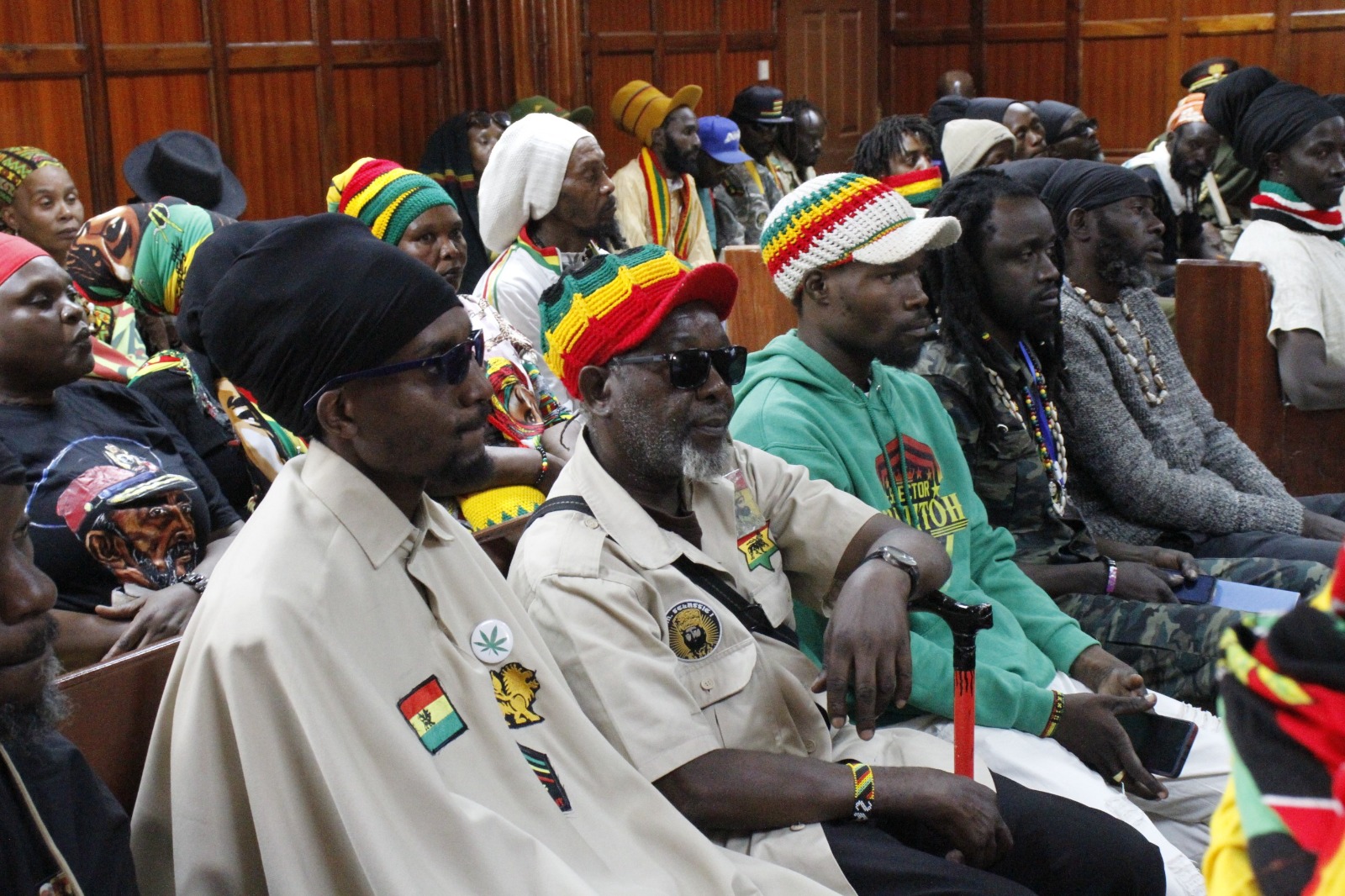
The High Court in Nairobi has adjourned the hearing of the Rastafarian Society of Kenya (RSK) case seeking the legalization of marijuana for religious purposes, following an application by the National Authority for the Campaign Against Alcohol and Drug Abuse (NACADA) to be joined as an interested party.
The matter, filed at Milimani High Court’s Constitution and Human Rights Division in 2021, was scheduled to commence on January 15, 2026, and continue on January 16.
Justice Bahati Mwamuye admitted NACADA’s application, filed through advocate Christopher Marwa, and granted them time to file a response. Following the application, the hearing was rescheduled for January 30 and February 4, 2026, in an open court.
“Your Honour, we seek to be joined as an interested party in this petition and pray for an adjournment to file our response,” Marwa said.
Justice Mwamuye allowed the application and directed NACADA to file and serve their response within 14 days. “The application is hereby allowed. File and serve your response within 14 days, and the hearing will continue on January 30 and February 4, 2026,” he stated.
The petition, filed by Sheria Mtaani on behalf of the Rastafari Society, seeks to overturn several provisions of the Narcotic Drugs and Psychotropic Substances (Control) Act, 1994. The petitioners argue that the blanket criminalization of cannabis violates the constitutional rights of Rastafari adherents to practice their faith and live with dignity.
Represented by lawyers Danstan Omari and Shadrack Wambui, the petitioners decried frequent harassment by police officers alleging possession of marijuana.
“We want to warn officers victimizing Rastafarians that a matter is proceeding in court and they must stop harassing them until it is determined,” Wambui said. He added that the sacramental use of cannabis for meditation and spiritual nourishment is protected under the Constitution.
Omari said Article 32 has been violated, noting that all marginalized groups, including the Rastafarians, are constitutionally protected. “Rastafarians cannot be discriminated against for being a minority and have not practiced their faith in a manner repugnant to morality,” he stated.
The Society, registered under the Societies Act as the umbrella body for Rastafari mansions, tabernacles, orders, and followers, says the law’s strict penalties unfairly target their spiritual practices.
The long-running petition will now be heard over two consecutive days, ending a legal battle that started in 2021, during which the State has not responded. The judge previously ruled that the hearing would proceed even without the State’s participation if replies remained outstanding.
According to the petition, the ritual and sacramental use of cannabis is central to Rastafari identity, yet treated as a criminal act, resulting in stigma, discrimination, and marginalization.
Spokesperson Mwendwa Wambua, alias Ras Prophet, described the case as a fight for religious dignity and equal treatment under the law. The petitioners accuse the Attorney General and Kenya Law Reform Commission of failing to update narcotics laws, which criminalize private or communal use, preparation, or cultivation of cannabis while exempting medical and authorized users.
They seek a court declaration that sections 3, 5, and 6 of the Narcotics Act are unconstitutional for failing to recognize religious use. They argue that current penalties, including imprisonment of up to 20 years, are disproportionately harsh and violate Articles 24, 27, 31, and 32 of the Constitution, which protect equality, privacy, religious freedom, and human dignity.
The petitioners also urge the State to undertake reforms allowing the possession, cultivation, and use of cannabis in private dwellings and designated places of worship, ensuring equal protection for all faith communities.