
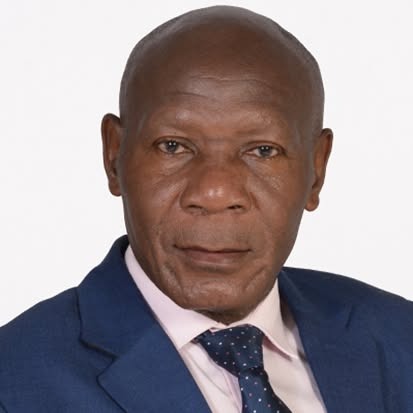
By KENNEDY BUHERE
Former Teachers Service Commission (TSC) Chief Executive Officer Benjamin Sogomo has described the replacement of Principal Secretary for the State Department of Basic Education Prof Julius Bitok with John Olooltua, a career educationist, as “godsent”.
“This is because, for the last 25 years, the department has largely been run by either professors from universities or civil servants without training and experience in the management of basic education,” he noted.
In an article published in Education News in its July 20-August 10, 2026 edition, titled How Bad Leadership Choices Have Messed Up Education Reforms at MoE, Sogomo argued that people tend to pay attention to what they understand best because they derive comfort from working in areas where they have expertise.
Mr Sogomo, however, is mistaken on four counts.
First, the alleged bad policy decisions that the Ministry has successively pursued were not the result of the State Department being led by “professors from universities or civil servants without training and experience in the management of basic education”.
Second, President William Ruto’s decision to replace Bitok with Olooltua may have less to do with Olooltua’s “training and experience in the management of basic education” than with his proven general management and leadership experience in the State Department of Tourism.
Third, Kenya has had some of the best leaders as Ministers and Permanent or Principal Secretaries responsible for education over the past 25 years. Some of the most potentially transformative policy decisions the Ministry is pursuing today were made by Ministers and PSs with little or no “training and experience in the management of basic education”.
Fourth, the Civil Service provided the pool from which Presidents Jomo Kenyatta, Daniel arap Moi and Mwai Kibaki selected Permanent Secretaries, now Principal Secretaries, to head Ministries. Most of those who headed the Ministry of Education in the 1960s were seasoned civil servants. They were responsible for the excellent primary and secondary education enjoyed by those born in that decade.
Prof George Saitoti and Prof Karega Mutahi steered the establishment of Free Primary Education (FPE) and Free Day Secondary Education (FDSE) as Minister and Permanent Secretary, respectively.
Prof Sam Ongeri and Prof James Ole Kiyiapi introduced the admission of learners into secondary schools based on whether they came from public or private primary schools. Before then, private primary schools, despite accounting for less than 30 per cent of enrolment, were taking more than 70 per cent of the available Form One places in the original 18 national and elite provincial secondary schools.
This was untenable. It took a medical doctor and an environmental expert to address the imbalance.
The late Mutula Kilonzo stopped holiday tuition and remedial teaching despite resistance from some teachers who, in theory, understood the basis of school holidays and remedial teaching in the education of learners.
Prof Jacob Kaimenyi stopped exorbitant secondary school fees through the Kilemia Mwiria Task Force on Secondary Education Fees. The current ceilings on capitation and fees paid by households were largely the work of Kaimenyi, a medical doctor.
Similarly, Kaimenyi banned the ranking of students in national examinations, a policy that had limited educational value given the unequal resources and circumstances of schools.
Dr Fred Matiang’i cracked down on brazen cheating in national examinations. Curriculum delivery and administration of national examinations are in the hands of educationists. Yet it was school administrators and other powerful interests who created serious challenges for Kaimenyi during the 2015 examination debacle.
Dr Amina Mohamed similarly tried to stop the brazen violation of instructional or class hours stipulated under Section 84 of the Basic Education Regulations, 2015. She did so after establishing that excessive teaching was among the factors contributing to unrest in schools.
Amina also introduced half-term breaks for primary school learners, arguing that it was incongruous to allow learners in secondary schools to go for half-term while denying their younger siblings the same opportunity.
These policy decisions were well-intentioned. They addressed core issues in education: access, equity and proper curriculum delivery. And they were steered by people who were not necessarily educationists.
It was Ezekiel Machogu who urged the Presidential Working Party on Education Reform (PWPER) to reduce the number of subjects prescribed by the Ministry for learners in primary and secondary schools under the Competency-Based Education system. He advocated greater depth in learning, a defining characteristic of quality education.
Suffice it to say that you do not need to be an educationist to be the main bull or cow in Jogoo House. Any properly educated person with the right leadership qualities can provide first-rate leadership to the education sector.
Leaders do not necessarily need expert skills in the specific field they have been appointed to manage or lead.
Their primary responsibility is to guide people, manage major goals and build strong teams. The greatest strengths a person can bring to organisational leadership are curiosity and courage.
A leader asks questions because he is inquisitive. He confronts persistent problems because he has courage. Expertise, on its own, never gave anybody courage.
You do not need to be an expert to frame the right questions. What holds organisations back are often not technical issues but lack of vision and focus, as well as the insidious influence of vested interests — threats from within and outside an organisation.
A leader must win the trust of technical staff who can help him understand where the organisation is and where it needs to go in light of its overarching vision and purpose. That is the role of the person steering the ship called a Ministry or State Department.
A good leader lets trained workers handle technical choices. He focuses on the cathedral, not the individual stones that make up the cathedral.
Technical issues are the responsibility of supervisory staff and the rank and file within an organisation. At entry-level positions in a Ministry, technical expertise is critical. But once one reaches the top, expertise in a specific field becomes less relevant. It can even become an impediment.
“Leaders who come up an expertise track almost always derail here, because they react to the challenge by relying on their core strengths: high intelligence and the capacity for hard work,” Wanda Wallace, president and CEO of coaching and consulting firm Leadership Forum, and David Creelman, CEO of human capital management firm Creelman Research, wrote in the June 18, 2005 edition of Harvard Business Review on how leaders deal with no longer being the expert.
It does not matter whether one rises through the ranks in an area of expertise or is promoted into responsibilities outside one’s professional background. The job is to inspire trust, provide the tools and resources subordinates need to succeed, and set goals to be achieved within specified timelines.
An expert who becomes the leader of a sector must look beyond the technical aspects of the organisation. If he gets too deeply involved in technical matters, that amounts to meddling or abandoning his leadership responsibilities.
US Navy Admiral Hyman G. Rickover once observed that the job of a leader is to solve problems brought to him by subordinates. The leader should also use his judgement to identify latent problems that may be impeding an organisation from achieving its goals.
Whatever the problem, the leader must ask questions and listen to experts as they brainstorm and seek to understand its causes and possible solutions. Ultimately, he gives direction and takes responsibility for the actions taken to solve the problem.
He must, however, support experts in two important ways: give them room to bring problems to the table for thoughtful discussion, and, after making a decision, provide the moral and material support needed to execute it without interference from any quarter.
The Ministry of Education has knowledgeable and experienced technocrats. They understand the problems facing the sector and have knowledge of possible solutions. The leadership should seek their advice rather than listen excessively to outsiders.
Some of the challenges facing the sector include weaknesses in beginning reading instruction, with a significant number of learners transiting to secondary school without the necessary reading fluency.
Other challenges include inequitable financing of schools caused by funding models based on enrolment; unwieldy school sizes, particularly in C1 and C2 schools; hurried syllabus coverage; cheating in national examinations; disproportionate numbers of learners scoring D and below in KCSE; persistent glitches in the National Education Management Information System; shortages of teachers in some categories of schools and regions; and indiscipline and unrest in secondary schools.
Mr Sogomo, subject-matter mastery or pedagogical knowledge has little value to whoever is, for the time being, steering the ship of education if it comes at the expense of effective leadership.
What is required at the top of the education sector is a generalist leadership style — not necessarily expertise in a particular technical area.
The leader should provide the vision, ask the difficult questions, listen to the experts, make the necessary decisions and take responsibility for the outcomes.
Kennedy Buhere
Communication Specialist
[email protected]
